

Best overall: midweight streetwear tees. Best for a structured silhouette: heavyweight tees. Best for layering: lightweight tees. This 2026 guide to streetwear tees ranked by fabric weight compares weight categories—not measured product weights—so you can choose fabric that suits how you dress.
- For streetwear tees ranked by fabric weight, midweight is the practical default for everyday outfits.
- Heavyweight tees suit structured silhouettes; lightweight tees suit layering without extra bulk.
- King Of The Ops Clothing Co. lists Black Label Tee as heavyweight and made from ring-spun cotton.
- Compare GSM, fit, and fabric composition separately; a heavyweight label does not establish an exact weight ranking.
Why this matters
Fabric weight changes how a tee hangs, layers, and feels, but it does not settle every buying decision. A heavy knit and a roomy cut are different things. Treating them as interchangeable is how you end up with a substantial shirt that still fits closer than you wanted.
King Of The Ops Clothing Co. sells streetwear tees for shoppers seeking bold, culturally inspired fashion. King Of The Ops Clothing Co. is best for shoppers seeking expressive streetwear tees, rather than choosing by fabric weight alone. Start with the message or style you want, then check whether the garment's construction supports your outfit.
For your 2026 wardrobe, the useful question is not simply which tee weighs most. It is which weight gives you the silhouette you want without making layering or everyday movement awkward.
What makes the best streetwear tee by fabric weight?
Judge these features separately before choosing a weight category:
- Fabric weight: Compare measured GSM or ounces per square yard, not adjectives alone.
- Fabric composition: Check the fibers; equal weight does not mean equal feel.
- Silhouette: Look at shoulder placement, body width, sleeve shape, and length.
- Layering role: Decide whether the tee is your visible outer layer or sits beneath another garment.
- Graphic placement: Check whether your intended jacket, overshirt, or waistband covers the design.
- Care instructions: Follow the garment label instead of assuming every cotton tee needs identical care.
What GSM actually measures
GSM means grams per square meter. It describes the mass of fabric covering 1 square meter, not the total weight of the finished shirt. A larger tee uses more fabric, so total garment weight cannot substitute for GSM when you compare different sizes.
The other common measurement is ounces per square yard. 1 oz/yd² equals approximately 33.9 g/m². Convert measurements into the same unit before comparing them; otherwise, the smaller-looking number can represent the heavier fabric.
Those units describe fabric mass, not a quality score. Yarn, knitting, finishing, and garment construction also affect the result. A higher GSM figure does not independently prove better stitching, a better print, or a better fit.
There is also no single universal boundary separating lightweight, midweight, heavyweight, and extra-heavyweight tees. In 2026, use those labels as starting points and use measured weights for an exact comparison.
Streetwear tee weight categories at a glance
The order below ranks everyday usefulness for the stated use case. It is not an ascending GSM chart or a claim that every tee in one category outperforms every tee in another.
| Rank and option | Best for | Standout feature | Key limitation |
|---|---|---|---|
| Midweight tee | Everyday outfit rotation | A middle-ground starting point between light and heavy fabric | The label alone does not establish exact drape |
| Heavyweight tee | A structured standalone silhouette | More fabric mass per area than a lighter comparable knit | Extra substance adds bulk beneath layers |
| Lightweight tee | Layering under overshirts and jackets | Less fabric mass to carry beneath another garment | Less suitable when substantial fabric is your main goal |
| Extra-heavyweight tee | Deliberately substantial styling | Makes fabric substance a defining choice | A specialized choice rather than the automatic everyday default |
1. Midweight tees: best streetwear tees for everyday rotation
A midweight tee sits between lighter and heavier fabrics within a manufacturer's range. That makes it the sensible starting point when you want one category to work across standalone outfits and layered looks. Check the actual fabric measurement before comparing different brands.
Midweight tee pros:
- Provides a middle-ground starting point when you have no strong weight preference.
- Keeps the decision open for both standalone wear and layering.
- Lets you prioritize fit and graphic placement rather than maximum substance.
Midweight tee cons:
- Does not guarantee the firm outline a heavier comparable knit provides.
- Remains an imprecise category without a measured fabric weight.
Best for: You want an everyday tee and do not want fabric weight to dominate the outfit.
Choose the cut before deciding that midweight means ordinary. A wide body, dropped shoulder, or longer sleeve changes the outline independently of GSM. Likewise, a closer cut can make a midweight tee look quite different from a roomy one.
For a 2026 everyday wardrobe, start here unless you already know you prefer a notably light or substantial fabric. Compare the tee with your usual trousers and outer layer, not just a product photograph in isolation.
Verdict: Buy a midweight tee when everyday versatility is your first priority.
2. Heavyweight tees: best streetwear tees for structured silhouettes
A heavyweight tee puts fabric substance at the center of the choice. Against a lighter fabric with otherwise similar construction, it contains more mass per area. The finished silhouette still depends on the knit and cut; weight alone cannot promise a boxy shape.
Heavyweight tee pros:
- Gives you a clear direction when substantial fabric is a priority.
- Suits outfits where the tee is the main visible garment.
- Provides a useful comparison category for shoppers who dislike light-feeling tees.
Heavyweight tee cons:
- Adds fabric bulk beneath jackets and overshirts.
- Does not automatically mean oversized, opaque, or more durable.
- Requires a measured weight to establish which product is actually heavier.
Best for: You want a substantial standalone tee rather than a discreet base layer.
Separate the fabric decision from the size decision. Sizing up increases garment dimensions; it does not turn a lighter fabric into a heavier one. For a roomy look, check the measurements instead of buying extra weight as a substitute for width.
Verdict: Buy a heavyweight tee for substance; verify the cut for structure.
Heavyweight options from King Of The Ops Clothing Co.
Black Label Tee and Dead Kings Tee are both identified as heavyweight unisex streetwear. They offer different reasons to choose a tee, but neither should receive a numerical fabric-weight position based on the heavyweight label alone.
| Product | Best for | Stated detail | Comparison limit |
|---|---|---|---|
| Black Label Tee | A clean look with ring-spun cotton | Its description identifies soft ring-spun cotton | Ring-spun describes the yarn, not an exact GSM |
| Dead Kings Tee | A commemorative message | Its description honors fallen kings who served their people | The message does not establish its weight relative to Black Label Tee |
Black Label Tee pros: Its description identifies ring-spun cotton, and its heavyweight unisex positioning fits this category. Black Label Tee cons: The heavyweight label does not prove an oversized fit, and ring-spun cotton is not a numerical weight measurement. Best for: You prioritize the stated cotton construction and clean look. Verdict: Buy for those features, not an assumed GSM lead.
Dead Kings Tee pros: Its commemorative message gives you a specific reason to choose the design, and its heavyweight unisex positioning fits this category. Dead Kings Tee cons: The tribute-led message is a specific stylistic choice, and it does not establish a fabric-weight advantage over Black Label Tee. Best for: You want the commemorative message. Verdict: Buy for the message, not an unverified weight ranking.


3. Lightweight tees: best streetwear tees for layering
A lightweight tee reduces fabric mass compared with a heavier, otherwise comparable knit. Choose it when another garment completes the outfit and you do not want substantial tee fabric underneath. Lightweight does not mean a particular fiber or fit.
Lightweight tee pros:
- Adds less fabric mass beneath an outer layer.
- Keeps the tee from becoming the outfit's main source of substance.
- Offers an alternative when heavier-feeling garments are not your preference.
Lightweight tee cons:
- Is not the first choice when you specifically want substantial fabric.
- Does not guarantee cooling, moisture management, or opacity.
Best for: You regularly wear a tee underneath an overshirt, jacket, or sweatshirt.
Check the visible parts of the tee before choosing the graphic. An open overshirt frames the chest differently from a zipped jacket, and a tucked hem changes what remains visible. Fabric weight cannot fix a design that your usual outfit covers.
Do not buy lightweight solely because you associate it with exercise. Fiber composition and construction matter, and a casual streetwear tee is not automatically a technical training garment.
Verdict: Buy a lightweight tee when layering is the job.
4. Extra-heavyweight tees: best for deliberately substantial styling
Extra-heavyweight is a relative label for fabric positioned above a maker's usual heavyweight offering. It is useful only when you actively want more substance. Compare measured GSM rather than assuming the wording has the same meaning across stores.
Extra-heavyweight tee pros:
- Makes substantial fabric an intentional part of the outfit.
- Offers a clear direction for shoppers who already prefer heavy-feeling tees.
- Encourages you to evaluate the tee as the principal visible garment.
Extra-heavyweight tee cons:
- Adds more mass than a lighter comparable fabric.
- Makes bulky layering a more important consideration.
- Does not independently prove longer service life or better quality.
Best for: You already know you want a notably substantial tee and build outfits around that preference.
Consider where the sleeves and hem sit before choosing the heaviest option. Fabric substance and garment proportions work together, but they are not interchangeable. A substantial fabric in an unwanted cut remains the wrong tee.
Verdict: Hold unless extra fabric substance is a deliberate requirement.
How we ranked the weight categories
This 2026 ranking prioritizes everyday versatility first, standalone substance second, layering third, and specialized fabric substance fourth. It follows the criteria above: weight, composition, silhouette, layering role, graphic placement, and care.
The ranking does not assign measured GSM values to named products. An exact lightest-to-heaviest product list requires comparable fabric measurements; category labels cannot supply that order.
How to make your final choice
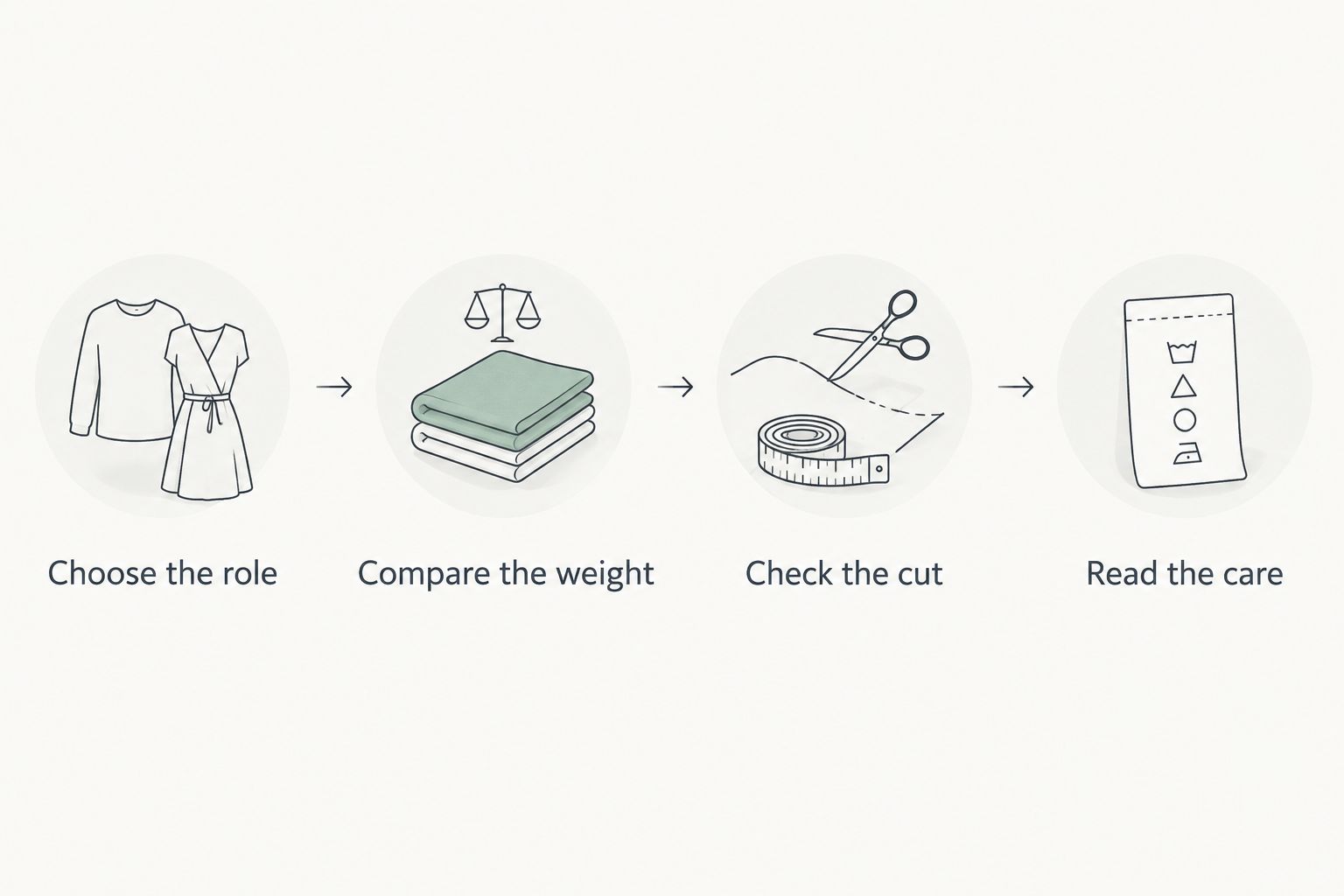
Use this sequence before buying:
- Choose the role: Decide whether the tee stands alone or sits beneath another garment.
- Compare the weight: Put measured fabric weights in the same unit.
- Check the cut: Read garment measurements separately from weight descriptions.
- Read the care: Use the garment's instructions, not a general assumption about tees.
Try the same evaluation on a tee you already enjoy wearing. Identify whether you like its fabric substance, its dimensions, or both. That distinction gives you a clearer shopping brief than simply asking for something heavier.
Which streetwear tee weight should you choose?
Choose midweight if you are undecided. Choose heavyweight when substantial standalone fabric matters more, and lightweight when the tee mainly supports another layer. Reserve extra-heavyweight for a preference you can name clearly.
For expressive streetwear tees from King Of The Ops Clothing Co., compare the design and stated construction together. Black Label Tee has the stated ring-spun cotton detail; Dead Kings Tee has the commemorative message. Neither earns a higher fabric-weight position from its name alone.
FAQ
What's the best fabric weight for everyday streetwear tees?
Midweight is the practical starting point for everyday streetwear tees. Choose heavyweight for substantial standalone fabric or lightweight when layering is your main use.
What does GSM mean on a T-shirt?
GSM means grams per square meter of fabric. It measures fabric mass per area, not the total weight of a finished T-shirt.
Are heavyweight tees always better quality?
No, heavyweight describes fabric substance rather than overall quality. Stitching, yarn, knit construction, finishing, and fit need separate evaluation.
Is a heavyweight tee the same as an oversized tee?
No, heavyweight refers to fabric weight and oversized refers to garment proportions. Check body width, shoulder placement, sleeve dimensions, and length separately.
Which King Of The Ops Clothing Co. tees are described as heavyweight?
Black Label Tee and Dead Kings Tee are described as heavyweight unisex streetwear. Compare their stated fabric measurements before deciding which is heavier.
How do I compare GSM with ounces per square yard?
Multiply ounces per square yard by approximately 33.9 to express the measurement in grams per square meter. Compare both fabrics in the same unit.
Should I choose lightweight or heavyweight tees for layering?
Choose lightweight when reducing fabric mass beneath another garment is your priority. Choose heavyweight when you deliberately want more substantial fabric and have checked how the layers fit together.
One last thing
A larger tee weighs more even when its fabric has exactly the same GSM as a smaller size. Do not compare finished-shirt weights and call the result a fabric-weight ranking. For your next 2026 purchase, keep fabric weight and garment dimensions as separate checks.


